
Tendon Repair Surgery
What is Tendon Repair Surgery?
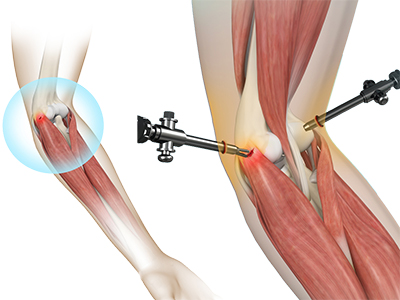
Tendon repair surgery is performed to repair a torn or ruptured tendon and restore normal function and movement to the joint. It is usually performed by arthroscopy. An arthroscope is a thin, pencil-like device fitted with a camera and a light source. The arthroscope is inserted through a small incision which allows your surgeon to view images of the torn tendon on a monitor and help operate miniature surgical instruments to perform the surgery.
What are Tendon Tears?
Partial or complete detachment of the tendon from the bone is called a tendon tear or a tendon rupture. Tendons are fibrous, flexible bands of connective tissue which connect muscles to the bones. Muscle contractions generate forces that are transferred to the bone through the tendon to enable walking, running or various other types of movement in the body. Tendon tears commonly occur at the shoulder joint, knee joint, hip joint, elbow joint, and ankle joint.
Causes of Tendons Tears
Common causes of tendon tear or rupture include:
- Direct trauma
- Sports injury
- Aging
- Excessive loading and stress on the tendon
- Injection of certain medications in the joint
Symptoms of Tendon Tears
The symptoms vary with the severity of the tendon tear. Common symptoms include:
- A popping or snapping sound when an injury occurs
- Pain and weakness of the joint
- Bruising around the tear
- Inability to lift or move the affected leg or arm
- Decreased weight-bearing capacity
Indications for Tendon Repair Surgery
Tendon repair surgery is indicated if you:
- Have severe pain following a tendon tear
- Need to return to an active lifestyle or sport without delay
- Are not responding to medications or non-surgical methods
- Are at low risk of a tendon re-tear after the surgery
Preparation before the Surgery
Your doctor will assess your symptoms and perform a physical examination. Imaging studies such as an X-ray, CT-scan, ultrasound or MRI may be ordered to further explore the extent of the damage.
Procedure
The surgery involves the following steps:
- You may be given general anesthesia or regional anesthesia.
- One or more incisions are made at the skin near the joint.
- An arthroscope is inserted through the incision.
- Miniature surgical instruments are inserted to remove the damaged part of the tendon and injured surrounding tissue.
- The damaged ends of the tendon are sewn together. Care is taken to prevent damage to nearby nerves or blood vessels.
- A suture anchor may be used to reattach a completely torn tendon to the bone.
- The incision is closed and covered with a bandage.
Recovery after the Surgery
Recovery includes the following:
- Depending on the injured area, the injured joint will be supported with a splint or sling or you will be encouraged to keep weight off your leg and avoid activities which may cause a re-tear.
- Painkillers will be prescribed to manage pain.
- Physical therapy instructions will be given to teaching exercises for flexibility, range of motion and strength-building.